The Breath That Came By Rain
THIS IS A WORK OF FICTION
By four in the afternoon the rain had turned Gariahat into a soup of headlights, tram wires, umbrellas, impatience, and frying oil. Buses leaned into one another like drunk uncles at a wedding. Hawkers had pulled blue plastic sheets over their stalls, so the footpath became a low wet tunnel where women in damp salwar suits inspected nighties by touch and men argued over the proper price of socks as if the Republic depended on hosiery.
Under the flyover, beside a tea stall where the milk had boiled itself into philosophical thickness, Dr. Nirmalya Sen stood with one shoe in brown water and the other on a loose paving slab that clicked like a bad tooth.
“Doctorbabu, today also clinic?” the tea seller asked, sliding him a glass.
“People fall sick in rain too, Tapan.”
“More in rain,” Tapan said. “God’s own drainage system working in reverse.”
Nirmalya smiled because Calcutta required this of you. The city kept producing its small jokes even while collapsing in installments. Posters of coaching centers flapped on the walls: NEET, JEE, IELTS, Spoken English, Nursing Assistant in Six Months, Go Abroad Before It Is Too Late. Beside them, a political slogan peeled off in wet strips, promising dignity to the poor with all the confidence of a leaking roof.
He drank the tea too quickly and burned his tongue.
Across the road, an ambulance was trapped behind a taxi whose driver had got out to shout at a delivery rider. The ambulance siren kept rising and falling, embarrassed by its own urgency.
Nirmalya turned into the narrow lane toward Chhayapath Diagnostic and Day Care Centre. The signboard still called it “multispeciality,” though its specialities were fever, fracture, pregnancy scares, blood pressure, dengue panic, and the thousand small betrayals of the Indian body. It occupied the ground floor of an old apartment building with mossy walls, grilled balconies, and residents who watched everything while claiming they had seen nothing.
His receptionist, Mili, met him at the entrance with the expression she reserved for patients who had brought either police trouble or cash.
“Sir, Mr. Dutta is waiting.”
“Which Dutta?”
She lowered her voice. “The one who pays in advance.”
That meant Bappa Dutta, a medical facilitator, though he preferred “international patient coordinator.” He wore linen shirts, spoke English with a travel-agent shine, and knew exactly which nursing homes would admit a man without asking for one paper more than necessary.
Inside the small waiting area, beneath a framed picture of a snow mountain nobody in the clinic could name, sat twelve men.
They were soaked. Not from rain alone. Fever had glazed their faces. Their clothes were good but crumpled by travel: jackets too heavy for Calcutta, shoes stained with mud, cheap masks damp against their mouths. One man rocked silently, arms folded, as if holding himself together. Another stared at the floor tiles with the intensity of prayer.
Bappa Dutta rose. “Doctor, delicate matter.”
Nirmalya looked at the men again. Foreign workers, he first thought. Then not workers. Their wrists had the clean, frightened look of men who had carried luggage, not bricks. One clutched a passport in a plastic folder. Another had a small gold cross at his throat.
“Where from?” Nirmalya asked.
“Central Africa,” said Bappa. “Transit through Dubai. Came this morning. Fever, weakness, vomiting. Maybe food poisoning, maybe malaria, maybe viral.”
“Then take them to a proper hospital.”
Bappa spread both hands. “Doctor, you know how these big hospitals behave. Deposit, police intimation, embassy, isolation drama. These people are already frightened. They have money. We stabilize, we test, then decide.”
Nirmalya felt the old dull anger move in him, not hot enough to act, not cold enough to ignore. There was a whole economy in the city built on the sentence then decide. Admit now, ask later. Scan now, explain later. Pay now, grieve later. Respectability in Calcutta had become a shirt worn over many stains; ironed daily, never washed.
“Symptoms?” he asked.
Bappa handed him a folded paper. “High fever. Body pain. Some bleeding gums in two cases. But also cough. Running nose. Everyone has cold these days. Monsoon.”
Nirmalya looked up.
Mili had gone very still.
“Bleeding gums?”
“Minor. Could be dental. Travel stress. Vitamin deficiency.” Bappa smiled with professional tenderness. “You know better than me.”
That was precisely what worried Nirmalya.
He took the men one by one into the examination room. The first, who gave his name as Pascal, spoke careful French-accented English. He said they had worked near an inland mining camp and had come to India because someone had told them treatment was possible here if one had cash and discretion. The words were not arrogant. They were desperate. He had the manners of a schoolteacher explaining a fire.
“Were you exposed to anyone ill?” Nirmalya asked.
Pascal closed his eyes.
“Many people were ill.”
“What illness?”
“We were told not to say that word.”
“Say it.”
Pascal whispered it.
In the rain-hum of the clinic, the word seemed not spoken but released.
Ebola.
Nirmalya sat back.
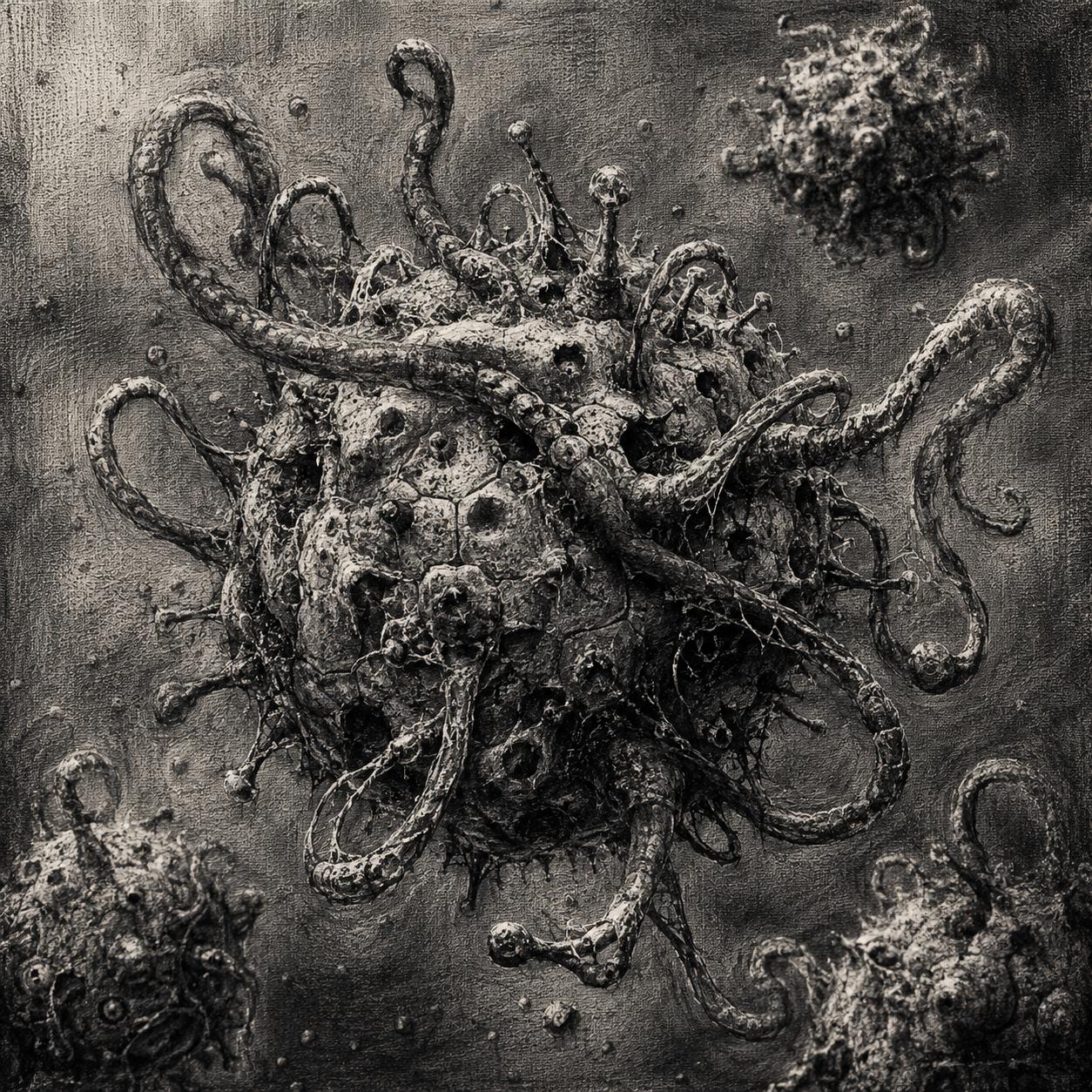
For a moment he saw not the man but a diagram from medical college, a neat little filament like a thread from some hellish sewing kit. Then the diagram vanished and there was Pascal again, sweating through his shirt, ashamed of the danger he carried as if illness were a moral failure.
“Which type?” Nirmalya asked, because doctors ask absurdly precise questions while standing at the edge of the pit.
Pascal gave a name that Nirmalya knew from old outbreak reports. Bundibugyo. Rare enough for newspapers to mispronounce, deadly enough for silence to gather around it.
Nirmalya stood up slowly. “No one leaves this room.”
Bappa laughed once. “Doctor, let us not overreact.”
“Shut the front door.”
Mili appeared at the curtain. She had heard enough. Her face had gone pale except for the red bindi above her eyebrows, bright as a warning light.
“Sir?”
“Lock the front door. Tell anyone outside we have a short electrical problem.”
“But there are patients waiting.”
“Send them away.”
Bappa moved closer. “Doctor Sen, be practical. These men came to you because you are reasonable. Not like those corporate fellows. They can pay. Full PPE, full charges, whatever.”
“We don’t have full PPE. We have gloves bought at discount and masks that smell of cardboard.”
“Then call someone.”
“And say what? Hello, I have twelve possible Ebola cases in a ground-floor clinic under a residential building beside a sweet shop?”
Bappa’s charm thinned. “You want police? Media? Foreign ministry? Everyone destroyed? You think they will praise your honesty? They will seal your clinic, arrest staff, make you villain, and those men will still die.”
It was not entirely false. That was the trouble with corruption: it often arrived wearing the shoes of realism.
Nirmalya told Mili to bring the emergency box, bleach, surgical masks, gowns, every pair of gloves, and the old plastic face shields from the dengue season. He called his senior from medical college, now in infectious diseases at a government hospital. The first call failed. The second rang and rang. On the third, a bored voice said, “Send details on paper. Don’t create panic.”
“This cannot wait.”
“Everything cannot wait, Nirmalya. Send details.”
The line clicked dead.
Outside, thunder walked over the city like furniture being dragged in heaven.
By evening the first patient began to cough blood.
His name was Joseph. He was twenty-eight, from near Goma, and he kept asking whether his younger brother had arrived. There was no younger brother among the twelve. He coughed into a towel and stared in horror at the red flowers spreading through the cloth.
Nirmalya placed him on oxygen. The cylinder hissed. The clinic lights flickered twice and went out.
“Load-shedding,” Mili said unnecessarily.
The generator coughed behind the building, failed, coughed again, then caught with a metallic groan. In the yellow emergency light, all faces became old.
The building residents started gathering outside the locked grill. Someone knocked.
“Doctorbabu? My mother’s sugar has fallen.”
“Come tomorrow,” Mili shouted.
“This is clinic or palace? Open.”
Bappa whispered, “You see? You cannot contain Calcutta with one lock.”
Nirmalya ignored him. He wrote down names. He noted symptoms. He moved between beds. He told the men what little he could without insulting them with false comfort. Most listened. One cried silently. Pascal translated for the others.
Around eight, Nirmalya heard the first odd thing.
It came from Bed Seven, where a quiet man named Emile had been lying with his face to the wall. He inhaled, and from his throat emerged not a cough but a long, reedy whistle, like wind finding a gap in an old window.
Then the others heard it too.
A second man made the same sound.
Then a third.
Mili looked at Nirmalya. “Sir?”
He had no answer.
Coughing was expected. Whistling was not. Nor was the way the sound lingered after the breath ended, as if something had remained in the air, thin and almost musical.
By ten the clinic smelled of bleach, sweat, wet clothes, fear, and the stale incense from the shrine near the reception desk. Outside, Gariahat had become a necklace of honking lights in rain. Inside, the men were failing.
Nirmalya finally reached an officer at the health department through a number he had saved years ago and never used. He spoke plainly. The officer listened, asked him to repeat the location twice, then said, “Do not use that word on the phone.”
“You understand what I am saying?”
“I understand you are making a serious report.”
“When will a team come?”
“We have to coordinate.”
“Coordinate fast.”
“Doctor, you people also must not admit such cases casually.”
Nirmalya closed his eyes.
In India, blame was the only ambulance that never got stuck in traffic.
He returned to the ward. Pascal caught his sleeve.
“Doctor, are we prisoners?”
“No.”
“Then why locked?”
“To protect others.”
“From us.”
“Yes.”
Pascal nodded. “That is fair.”
There was dignity in the way he said it. Not surrender. Accounting.
Near midnight, Mili found Bappa in the back corridor trying to leave through the service door.
She blocked him with a mop handle.
“Move,” he said.
“You brought them.”
“I did not invent the disease.”
“You brought them here.”
He looked past her toward Nirmalya. “Doctor, control your staff.”
Nirmalya was too tired for politeness. “Sit down, Bappa.”
“I have family.”
“So do the men.”
“That is not the same.”
“Of course not. Your family is in Lake Gardens.”
The insult landed. Bappa’s face hardened. “You think you are clean? This clinic runs because men like me bring cases. You ask fewer questions than you pretend. Everyone eats. Today suddenly you are Vivekananda?”
Nirmalya said nothing.
It was true enough to hurt.
Years earlier, after his wife died of septic shock in a hospital corridor while waiting for an ICU bed that became available only after another family paid more, Nirmalya had left government service and opened this clinic with borrowed money and a private vow: he would not become one of them. He had become, instead, a smaller version. Less cruel, perhaps. Less expensive. But he had signed forms without reading, accepted envelopes without receipts, allowed Bappa to bring foreign patients with incomplete histories because rent did not respect ideals. He had told himself that compromise was not corruption if done with sad eyes.
The city was full of such holy arithmetic.
At one in the morning, the health department called back.
“Team coming,” the officer said. “Two hours.”
“Two hours?”
“Roads flooded. Also need police support.”
“Bring proper isolation transport.”
“Yes, yes.”
Nirmalya knew what yes, yes meant. It meant the sentence had ended without the problem moving an inch.
The whistling breaths grew louder.
It spread beyond the twelve men. At first Nirmalya thought he imagined it, but then Mili stopped wiping the counter and touched her throat.
“I feel cold,” she said.
He took her temperature. Normal.
“Do you have a cold?”
“Everyone has cold in rain,” she said.
Her nose was running.
So was his.
The ordinary rhinovirus of the monsoon had passed through the city for weeks: in buses, tuition rooms, offices, metro compartments, damp classrooms, wedding halls, cheap cafés where one cup of tea served four friends. It had been harmless enough to ignore, intimate enough to be everywhere. The little democratic cold. Nobody respected it. Nobody stayed home for it. Calcutta sneezed into handkerchiefs and continued.
Now, inside the clinic, something in those ordinary colds seemed to be listening.
Nirmalya did not think this in scientific language. He was too frightened for that. He thought of the rainwater outside touching drain water, drain water touching spilled milk, blood touching cotton, breath touching breath. A city mixing itself endlessly because separation was a luxury sold in gated towers.
At two-thirty, Joseph died.
Pascal said a prayer over him in a low voice. The others answered when they could. The whistling in their lungs made the prayer sound as if it had come through reeds.
Mili cried without noise.
Bappa sat in a plastic chair, shaking.
At three, the building residents broke the first lock.
They had been gathering for hours: a diabetic mother, a child with wheezing, two drunk young men, one retired bank manager who considered all inconvenience an attack on civilization. Someone had smelled bleach. Someone had seen foreign men. Someone had decided there was either crime or opportunity inside. In Calcutta, rumor did not travel. It multiplied on the spot.
“Open! We know you are hiding people!”
The second lock held for less than a minute.
When the grill gate crashed open, the waiting room filled with umbrellas, wet sandals, angry faces. Mili screamed at them to stay back. Nirmalya ran forward, mask slipping, arms raised.
“Everyone out! This is dangerous!”
“Then why you kept it secret?” the bank manager shouted.
A woman carrying a child pushed past him. “Doctor, nebulizer now. He cannot breathe.”
“No!”
But the child was already inside, coughing hard, frightened by the shouting. He inhaled.
From the examination room came the whistling response of twelve ruined lungs.
The child stopped crying.
His eyes widened, not with pain, but surprise.
He whistled back.
That was when panic finally understood itself.
People ran. They collided at the door. Someone slipped on rainwater and blood-diluted bleach. The child’s mother screamed. Bappa bolted into the lane. Mili tried to grab him and missed. Nirmalya shouted until his voice broke.
By the time the police jeep arrived, the clinic had emptied itself into the night.
The health team came at dawn in masks and raincoats that made them look less like rescuers than embarrassed fishermen. They sealed the lane with rope. They took the remaining men away. Two were already dead. Pascal was conscious when they lifted him.
He looked at Nirmalya through the fogged face shield.
“I am sorry,” Pascal said.
Nirmalya shook his head.
“No. I am.”
Pascal tried to smile. “We both are.”
The ambulance door closed.
For three days, the news called it a suspected imported hemorrhagic cluster. Then an unusual febrile respiratory event. Then a public health situation. The words changed clothes every few hours, each outfit less alarming and less truthful.
By the fourth day, the city was coughing whistles.
It began in south Kolkata: Gariahat, Ballygunge, Dhakuria, Jadavpur. Then Sealdah. Then Howrah. Men in local trains turned their faces toward windows and whistled helplessly into the wet wind. Nurses at government hospitals heard it from corridors before they saw the patients. In markets, fish sellers continued shouting prices until their throats produced that thin reed note and customers stepped backward into vegetable baskets.
Schools closed. Then opened. Then closed properly.
The rain did not stop.
At first people wore masks again, those old pandemic relics pulled from drawers, smelling of naphthalene and memory. Then the masks became wet within minutes and clung to faces like failed promises. Pharmacies sold out of paracetamol, oral rehydration salts, gloves, thermometers, rumors. Tea stalls remained open longer than temples. Men debated whether Africans had brought it, whether Chinese chemicals had caused it, whether meat, rain, sin, vaccines, air-conditioning, or opposition parties were responsible.
Nobody debated overcrowding.
Nobody debated why a city of millions treated ventilation like a decorative suggestion.
Nobody debated why the sick first looked for a negotiator rather than a hospital.
By the seventh day, Nirmalya was in an isolation ward in a government facility on the eastern edge of the city. Mili was three beds away behind a plastic curtain. He could not see her, only hear her breathing. Sometimes normal. Sometimes the whistle.
His own fever rose and fell like a badly governed state. His gums bled. His joints burned. Yet the worst part was not pain. It was the sound.
At night, from every bed, came the same high note. It passed through curtains, masks, walls. It made the ward seem like a bamboo forest in a storm. Patients who could still speak begged nurses to stop it. Nurses, themselves feverish, had no way.
One evening, a young doctor in a face shield stood by Nirmalya’s bed.
“Dr. Sen, can you hear me?”
“Yes.”
“We need to know exactly when respiratory symptoms began among the index group.”
Index group. Twelve men had become a phrase.
“First evening,” Nirmalya said.
“Before bleeding?”
“In some.”
“Any unusual exposure in clinic? Aerosol procedure? Nebulization?”
“No.”
The young doctor hesitated. “Did any outsider enter before containment?”
Nirmalya closed his eyes.
“Yes.”
“How many?”
“Too many.”
The doctor’s pen paused.
“Approximate?”
Nirmalya saw again the broken lock, the umbrella tips, the child’s startled eyes.
“Calcutta,” he said.
The young doctor wrote something down, because even despair needed documentation.
On the tenth day, Mili died.
A nurse told him in the morning. She stood at a distance, hands clasped, and said, “Receptionist madam expired at 5:20.”
Receptionist madam. Mili had become a designation.
Nirmalya turned his face to the wall.
He remembered her on ordinary days, scolding patients who tried to skip the queue, feeding Parle-G to the stray dog outside, keeping a small bottle of cheap perfume in the drawer for after lunch because the clinic smelled of humanity. She had wanted to save enough to send her younger sister to a nursing course in Bengaluru. She had once told him, “Sir, in this city, everyone wants English-medium life with Bengali-medium salary.”
He had laughed then.
It seemed unforgivable now.
His fever worsened by evening. The whistling in his chest became steady. He dreamed of Gariahat underwater, tea glasses floating like small brown moons, buses moving without drivers, political posters breathing on walls.
When he woke, Pascal was standing beside his bed.
This was impossible for several reasons, the main one being that Pascal had died two days earlier, though nobody had told Nirmalya. Yet there he was, dry and clean, wearing the same travel-creased jacket, looking neither healed nor dead but patiently in between.
“Doctor,” Pascal said.
Nirmalya thought: fever.
“You are not here.”
“No.”
The ward lights buzzed. Rain struck the high windows.
Pascal looked toward the rows of beds. “It travels well now.”
“Don’t.”
“It wanted lungs,” Pascal said. “In us it drowned in blood. In your city it found practice. So many small colds teaching it how to enter politely.”
“That is not science.”
Pascal smiled sadly. “No. It is only what the dead can see.”
Nirmalya tried to call for a nurse, but the whistle came instead.
Pascal leaned closer. “Do you know why we came here?”
“For treatment.”
“For forgetting,” Pascal said. “In our country, everybody remembered who had touched whom, who had buried whom, who had hidden a fever. Memory became police. Memory became prison. We heard India was kind because it forgot quickly.”
Nirmalya wept then, not loudly. His body had no strength for drama.
“We are not kind,” he said. “Only crowded.”
Pascal considered this. “Crowding is also a kind of memory. Bodies remember what societies refuse.”
By morning, the apparition was gone.
The news worsened. Not that patients were dying; that had been happening for days. The new terror was distance. Cases appeared in Patna, Guwahati, Bhubaneswar, Ranchi, Delhi, Mumbai. A pilgrim train. A wedding party. A political rally. A hospital attendant who returned to his village. A student who took a bus home because hostel food had stopped. India, which had always possessed the genius of connection without the discipline of care, carried the breath outward.
International channels began showing maps.
The red circles bloomed.
Nirmalya watched on a wall-mounted television with no sound. The subtitles were worse than audio. Airborne concern. Mass casualties. Health system overwhelmed. Borders screening. Emergency cremations. Unverified reports. Billions at risk.
He looked for the word guilt in the subtitles, but television preferred larger fonts.
On the fourteenth day, his fever broke.
No one expected it. The young doctor called him “fortunate,” which seemed a poor word for surviving when everyone near you had been used up. His bleeding slowed. The whistle softened. He could sit up. He could drink water. He could answer questions from investigators who came in layers: district, state, central, international. They wanted timelines, names, payments, phone numbers, routes.
He told the truth.
Not because he was noble. Because lies required a future.
Bappa Dutta was found in a private hospital in Siliguri, dead under a false name.
The child from the waiting room became one of the early transmission links. His mother died. He did not. Videos of him breathing that strange note appeared everywhere until someone decided they were too disturbing and removed them, which meant they spread faster.
Three weeks after the first rain-soaked afternoon, Nirmalya was allowed to stand by a window.
The city beyond the hospital looked rinsed and abandoned. The bypass gleamed under rain. A few vehicles moved with guilty caution. Laundry hung from distant balconies. Somewhere, unseen, a conch blew at evening prayer. Calcutta had not ended. Cities rarely had that courtesy. They absorbed catastrophe, renamed it, and reopened tea stalls.
The young doctor came beside him.
“There is something you should know,” she said.
Nirmalya waited.
“Genomic reports came.”
He almost smiled at the grandness of it. Genomic reports. The modern priesthood had brought scripture.
“It is not a simple mutation,” she said. “The hemorrhagic virus is present, but the respiratory spread pattern follows the common cold virus circulating here. Some kind of recombination or packaging anomaly. We are still studying.”
“Meaning?”
She struggled. “Meaning the foreign outbreak did not become airborne by itself.”
He looked at her.
“It adapted here,” she said softly. “With what was already here.”
Outside, on a wet balcony of a nearby ward, an old man in a hospital gown leaned on the railing and coughed into the rain.
For a few seconds the cough was ordinary.
Then came the whistle.
Nirmalya understood, with a clarity so calm it felt like mercy, that the twelve men had not brought the disaster to Calcutta. They had brought only the match. The city had supplied the oil, the rag, the bottle, the hand, and the long crowded breath with which to blow it bright.
And in the glass before him, where his own reflection hovered over the drowned city, his mouth opened slightly, answering the old man note for note.